Published: 30 October 2026
Malta Itinerary 2027: 3, 4 or 5 Days, Planned Day by Day
A Malta itinerary of three days covers the essentials: Valletta and the Grand Harbour, Mdina with the Blue Grotto, and a day at Comino's Blue Lagoon. A fourth day adds Gozo by ferry and a fifth the south-east coast — Marsaxlokk, St Peter's Pool and an afternoon on the water at St Thomas Bay. The island is only about 27 km long, so the plan works from any base; what changes is how much time you spend on buses.
This is the itinerary we give friends who ask, day by day, with the real 2027 numbers: ferry times and fares, bus routes, opening hours and what each day costs. We run boats and water sports from St Thomas Bay in Marsaskala and take people to Comino daily in summer, so the sea days are the ones we know best.
How many days do you need for a Malta itinerary?
Three full days is the minimum that doesn't feel rushed: one for Valletta and the harbour, one for the old capital and the south coast, one for Comino. Four days lets you add Gozo, which is a different island with its own pace and genuinely deserves a whole day. Five days gives you the south-east, where the tour buses rarely go, plus a slower afternoon.
Distances are short — Valletta to Mdina is about 30 minutes by car, the airport is 20–30 minutes from Valletta, Sliema or St Julian's — but buses stop often and fill up in summer, so count one or two hours of travel per day. The order below assumes you arrive the evening before Day 1 and that the sea is calm; if a day is windy, swap Comino or the Blue Grotto with Mdina or Valletta.
- •Summer (June–September): typically 28–32 °C by day and a sea of 22–27 °C; start early, do the cities before 11:00 and keep the sea days for the afternoon.
- •Shoulder season (May and October): typically 24–25 °C, sea 18–23 °C; fewer queues at Comino and the Blue Grotto. The Comino trip runs daily until 15 September; after that, make Day 3 a second Gozo or beach day.
- •Our water sports at St Thomas Bay run April–October; dolphin tours May–September only.
- •North-westerly wind days (the majjistral) can keep the Blue Grotto boats in harbour — check the morning sea before you set off.
Day 1: Valletta, the Grand Harbour and the Three Cities
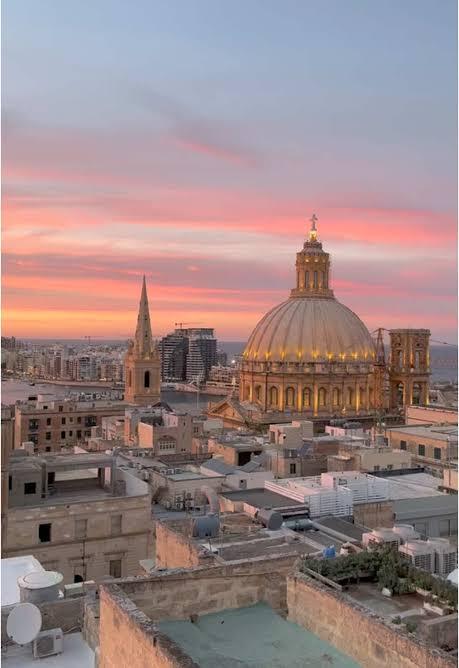
Start in Valletta, a UNESCO World Heritage city since 1980, built by the Knights of St John after the Great Siege of 1565. The grid of streets is small enough to walk in a morning: St John's Co-Cathedral for Caravaggio's “Beheading of St John”, then the Upper Barrakka Gardens for the view over the Grand Harbour. Be there at noon or at 16:00 for the saluting battery cannon.
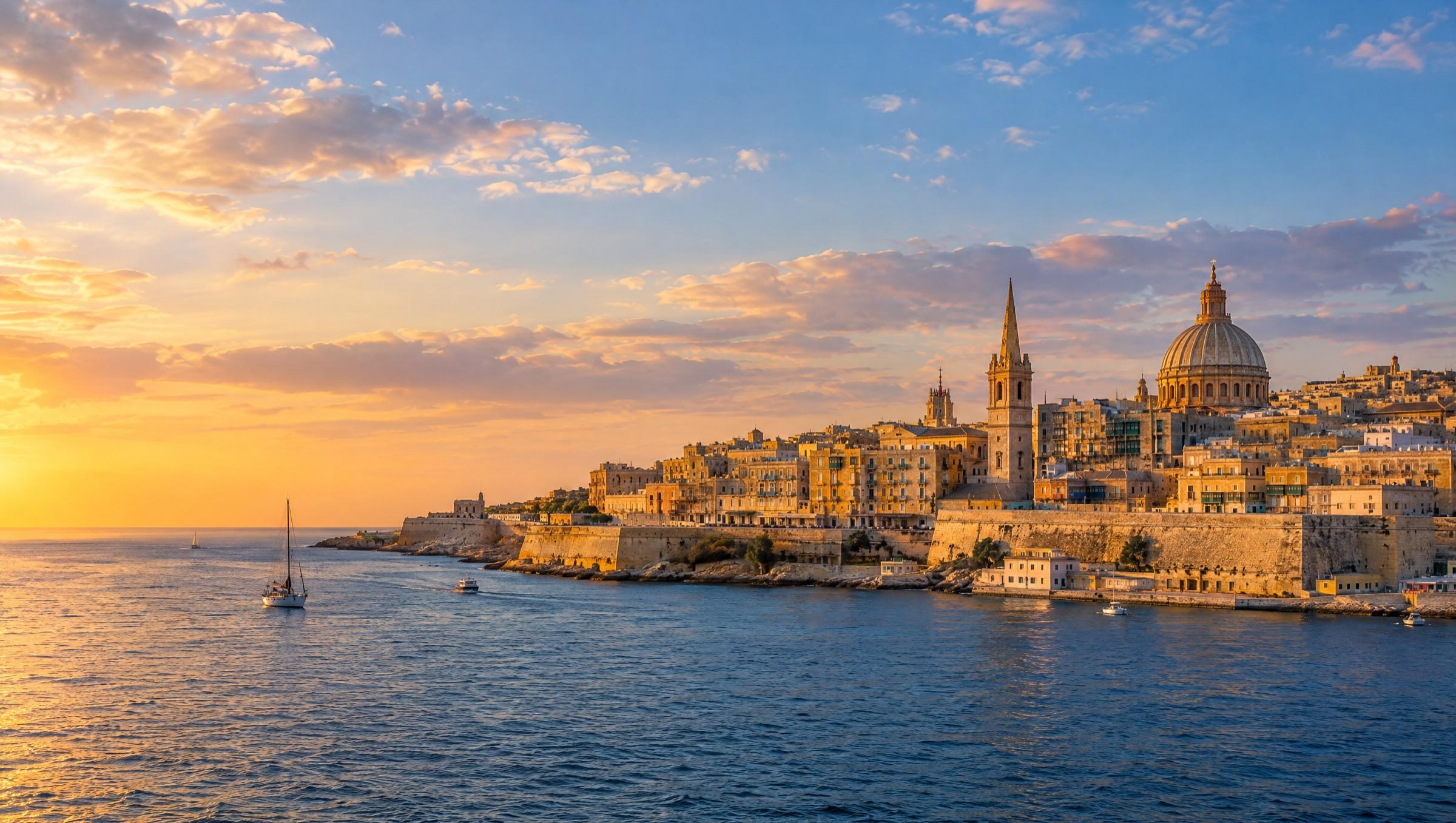
In the afternoon cross the harbour to the Three Cities — Birgu (Vittoriosa), Senglea and Cospicua — where the Knights lived before Valletta existed. The harbour ferry from Valletta takes a few minutes and runs frequently (check times at vallettaferryservices.com); Birgu's waterfront and Fort St Angelo are the highlights. Come back for sunset on the bastions: the light on the limestone is the picture everyone takes.
If you are staying in Sliema, the Sliema–Valletta ferry is the easiest way in and out and avoids the bus queues on the seafront.
Day 2: Mdina, Rabat, Dingli Cliffs and the Blue Grotto
Do the Blue Grotto first, in the morning, when the light enters the caves: the traditional boats leave the tiny harbour at Wied iż-Żurrieq for 20–25-minute rides along the sea caves, weather permitting. On a rough or north-westerly day they don't go out, so have Mdina ready as the fallback and check the sea before you leave.
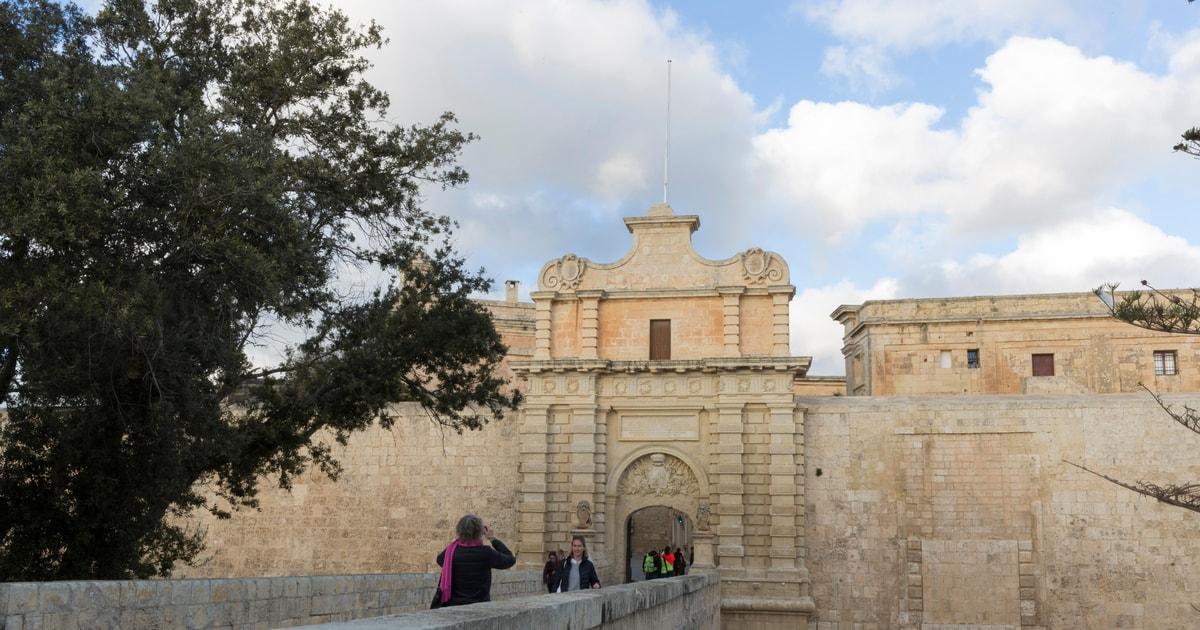
Then head inland to Mdina, the walled hilltop city that was the capital until the Knights arrived in 1530, about 30 minutes by car from Valletta. No cars inside the walls, palaces, the cathedral and views over half the island; Rabat, just outside the gate, has St Paul's catacombs. A two-hour guided walking tour of Mdina and Rabat costs from €20 and starts at the main gate — worth it if you like context with your streets.
Finish at Dingli Cliffs, the highest point of Malta at about 250 m, for sunset. Chaining all three by bus is slow, so this is the day a hire car or a ride-hailing app earns its money.
Day 3: Comino and the Blue Lagoon
Comino sits between Malta and Gozo and has no bridge and no cars; the Blue Lagoon is the shallow turquoise bay between Comino and Cominotto, with a white sandy seabed. It gets crowded from late morning in summer, there are kiosks but no shade, so bring water, a hat and something to sit on. If you have a boat for the day, the Crystal Lagoon and the Santa Maria Caves on the east and north side are reached only by sea and are far quieter.
The simplest way from the main resorts is our full-day trip: it departs daily at 10:00 from Welbee's Supermarket, Pendergardens, St Julian's (arrive 20 minutes early), costs €30 per person paid online, includes the return transfer and gives you the whole day at the lagoon. It is a boat transfer with crew on board, not a guided tour, around 30 guests per departure, running daily until 15 September; in July and August book a few days ahead.
One thing no boat includes: the Comino entry pass. The government QR is mandatory, it is not included in any boat trip, and you only get it at blcomino.com/product/blue-lagoon — sort it out before you go and keep it on your phone.
Day 4: Gozo by ferry — Victoria, Ġgantija, Dwejra and Ramla Bay
Gozo is the day that turns a good trip into a complete one. The Gozo Channel car ferry crosses from Ċirkewwa, at the north tip of Malta, to Mġarr in about 25 minutes, with sailings roughly every 45 minutes by day and a reduced night service. Foot passengers buy the return ticket at Mġarr on the way back — about €4.65 per adult and €1.15 per child (3–12); a car costs from about €15.70 including the driver. Check the current timetable and fares before you go.
From Valletta there is also the fast passenger ferry from Lascaris Wharf, below the Upper Barrakka lift, straight to Mġarr in about 45 minutes — around €7.50 one way or about €12–13 return online, several sailings a day and fewer in winter; check whether the Sliema route is running too. By bus, routes 41/42 run Valletta–Ċirkewwa and 222 Sliema/St Julian's–Ċirkewwa, but check the route in the tallinja app.
On the island, buses radiate from Victoria, so with public transport pick two sights; a quad (from €80 for 3 hours, picked up in Xewkija) or a hire car covers far more. A realistic day: Victoria and its Cittadella, the Ġgantija temples (UNESCO, c. 3600 BC and older than the pyramids), Dwejra with the Inland Sea and Fungus Rock — the Azure Window collapsed in March 2017, so don't go looking for it — and a swim at the red sand of Ramla Bay, or the fishing village of Xlendi for dinner.
Day 5: Marsaxlokk, St Peter's Pool and St Thomas Bay
The south-east is where we live and work, and it is the part of Malta most visitors miss. Marsaxlokk is a fishing village with the painted luzzu boats in the harbour and fish restaurants along the front every day; on Sunday morning the market runs roughly 07:00–13:00 and is at its best before 10:00, when the tour buses arrive. Buses 81/85 come from Valletta (check the route in the tallinja app), or it's about 25 minutes by car.
From Marsaxlokk, St Peter's Pool on the Delimara peninsula is a natural rock pool with flat ledges, deep clear water and a jumping crowd: no sand, no shade, no toilets and no bus stop, so it's a 35–45-minute walk or a short taxi, and early morning is the time in summer. Il-Kalanka, the rocky cove next door, is quieter.
For the afternoon, go to St Thomas Bay in Marsaskala, a shallow sand-and-rock bay where our base opens 09:00–19:00 from April to October. Kayaks start at €8 per hour for a single (16+) and €15 for a double (no minimum age — an adult paddles), a stand-up paddleboard at €10 per hour (16+), and the Fiat 500 boat, which needs no licence, at €55 for 30 minutes with a driver aged 21 or over. Finish with dinner on the Marsaskala promenade.
Where to stay and how to do this Malta itinerary without a car
Sliema and St Julian's are the practical base: most buses, the harbour ferry to Valletta, the restaurants and nightlife, and the Comino departure at Pendergardens is in St Julian's itself. Valletta is the atmospheric choice — you walk everywhere, and the Gozo fast ferry leaves from below the Upper Barrakka lift — but parking is nearly impossible and it is quiet at night. Marsaskala, our home, is cheaper and local: 15–20 minutes from the airport, 25–35 minutes by road from St Julian's and 40–55 minutes from Valletta on buses 91/92/93.
You don't need a car for this itinerary. A single bus ticket is valid for 2 hours including transfers and costs about €2.00 in winter and €2.50 in summer (mid-June to mid-October), paid on board in cash or by card; the 7-day Explore card, about €25, gives unlimited travel on Malta and Gozo and pays off over a 4- or 5-day trip with two or more rides a day; express Tallinja Direct routes cost about €3. Route numbers change, so check each one in the tallinja app, and fares at publictransport.com.mt.
- •Airport: X1–X4 express buses or a taxi, 20–30 minutes to Valletta, Sliema or St Julian's.
- •Bus 13 links Valletta, Sliema and St Julian's; the Sliema–Valletta ferry is faster in rush hour.
- •Ride-hailing apps (Bolt, eCabs) work everywhere and cost less than metered white taxis; useful for Day 2 and for St Peter's Pool.
- •A hire car only makes sense for the north-west beaches and Gozo — Malta drives on the left and parking is hard in Sliema, St Julian's and Valletta.
- •Summer buses fill up: at the Ċirkewwa and Valletta stops, arrive early or you may watch one go by.
Malta from the water: adding a boat day to the itinerary
If you have the budget for one boat day beyond Comino, two routes from our base at St Thomas Bay fit this plan. The first is Valletta from the sea: the Fiat 500 Grand Harbour tour is a 2-hour guided trip for up to 4 people with skipper and fuel included, €350 for the boat, from St Thomas Bay to the harbour entrance and through the inner basin past Fort St Angelo, the Three Cities and the Valletta waterfront. Availability is very limited, so book it as soon as your dates are fixed; it pairs well with Day 1 or Day 5.
The second is the south coast on the 28ft open boat with skipper — up to 15 people, fuel included, no minimum age: €180 for 2 hours, €270 for 3, €400 for 5 and €530 for a full day of 8 hours. The route runs between Marsaskala and Żurrieq, which means St Peter's Pool and the Delimara coast, cave entrances reachable only by boat, and the Blue Grotto from the water without the queue at Wied iż-Żurrieq. The price is for the whole boat, so it splits well between 8 and 15 people.
Most of our activities take a small deposit online and the balance at the meeting point on the day; the Comino trip is paid in full online. If we cancel for sea conditions you get a full refund or a free reschedule.
Frequently asked questions
Is 3 days enough to see Malta?
Yes for the essentials: Valletta and the Three Cities, Mdina with the Blue Grotto, and Comino. You will skip Gozo and the south-east, which is why four or five days feel much more complete. With only three days, base yourself in Sliema or St Julian's to cut travel time.
Is it better to stay in Valletta or Sliema?
Sliema and St Julian's win for logistics: more buses, the harbour ferry, nightlife and the Comino departure point. Valletta wins for atmosphere and for walking to everything, at the cost of parking and quieter evenings. For a 3-day trip without a car we would choose Sliema; for a slower cultural trip, Valletta.
Can you visit Gozo and Comino on the same day?
By public ferry it is a rush, and the Comino trip itself takes the whole day. If you want both, a private boat does it: our 28ft boat from St Thomas Bay runs a full 8-hour day to the Blue Lagoon and the Gozo coast for €650 for the boat, up to 15 people, May–October. The Comino entry QR is still mandatory and not included.
Do I need to book the Comino boat trip in advance?
In July and August, yes — departures are limited to around 30 guests and sell out days ahead. In May, June and September a day or two is usually enough. Whatever the date, get the government entry pass at blcomino.com/product/blue-lagoon first: it is mandatory and no boat trip includes it.
What is the best month for a Malta itinerary?
For this plan, May–June and September are the sweet spot: typically 24–29 °C, a sea of 18–26 °C, the Comino trip running daily and fewer people at the Blue Lagoon. July and August are hotter (31–32 °C) and busier but everything is running; October is still 25 °C with a 23 °C sea, though the daily Comino trip ends on 15 September.
How much does the Gozo ferry cost from Malta?
The Gozo Channel ferry from Ċirkewwa costs about €4.65 return for an adult foot passenger and €1.15 for a child aged 3–12, paid at Mġarr on the way back; a car is from about €15.70 including the driver. The fast ferry from Valletta is around €7.50 one way or about €12–13 return online. Check current fares on the official sites before you travel.